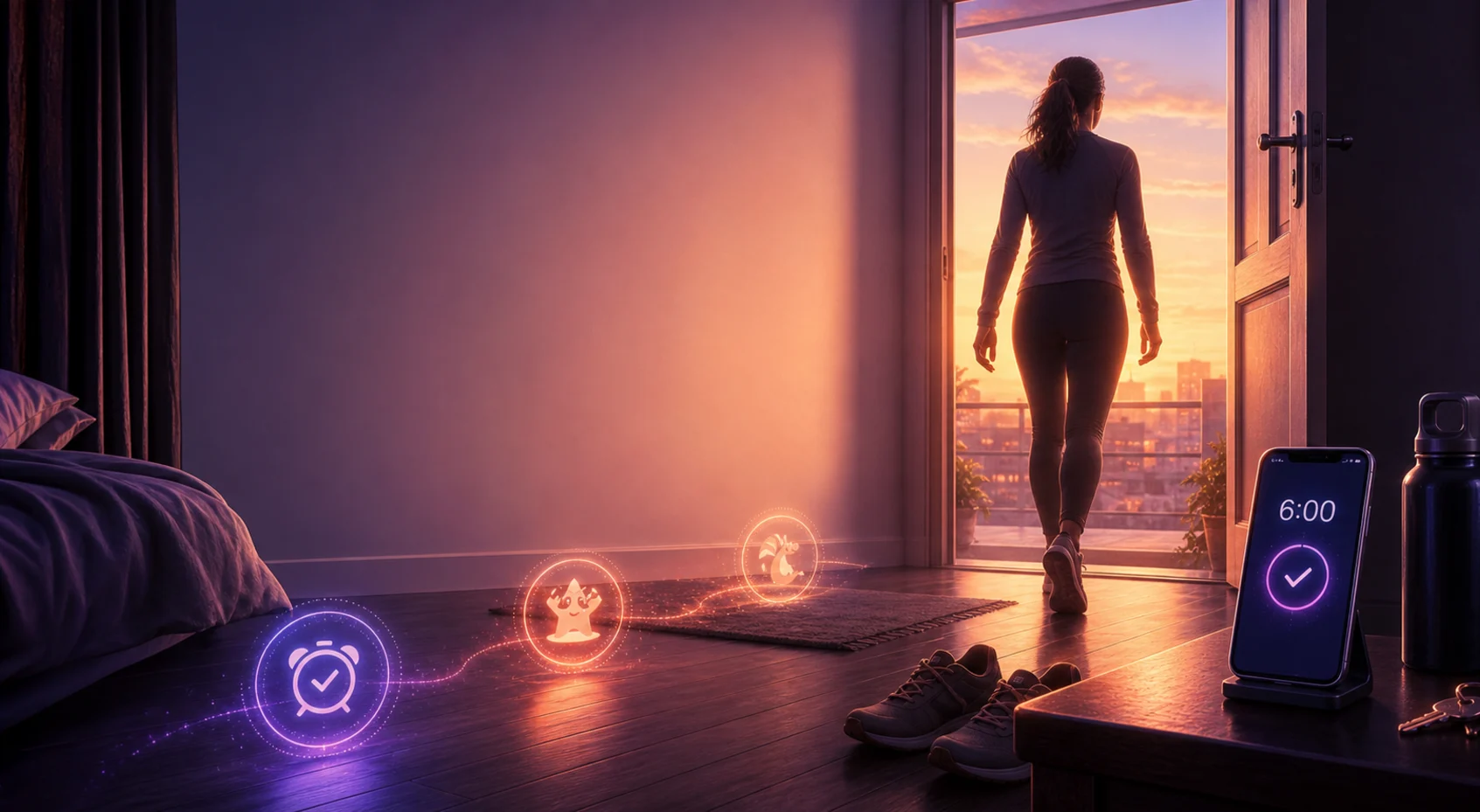
Get out of the dark room, do one basic care task, eat or drink what normally helps, and begin the smallest useful thing. That is enough for a low-energy morning.
Today doesn't need your finest routine
You open your eyes and already feel behind your own body. This isn't the morning for a cold plunge, ten goals, and a speech about discipline. Decide what absolutely needs to happen: medication as prescribed, bathroom, clothes, something to eat or drink, and getting where you need to go safely.
Put the alarm task beside the first of those things. A code by the sink is more helpful than fifty calculations under the blanket. Once you are there, do the next small thing. You can decide about exercise, errands, and ambitious work after your brain has had a chance to join you.
Be curious if this keeps happening
Light, ordinary movement, food, and time may help you feel more awake. They aren't a diagnosis. Notice whether the exhaustion follows a short night, hard training, illness, stress, medication changes, or no clear pattern. A few notes can be useful without turning your life into a spreadsheet.
If tiredness is new, severe, or making driving and work unsafe, get medical advice. Riso can help you take the first step on a rough morning. It can't produce energy your body doesn't have, and it should never make you feel guilty for needing care.
Common questions
Should I exercise when I wake up exhausted?
Choose gentle movement if it feels safe. A sudden or severe change in energy deserves rest and, when needed, medical advice.
What is the smallest useful routine?
Basic care, leaving the sleep environment, and one meaningful next action. Small still counts.
Sources & further reading
We use primary public-health guidance and original research where the topic makes factual claims about sleep. Sources are reviewed for relevance, not used as decoration.
