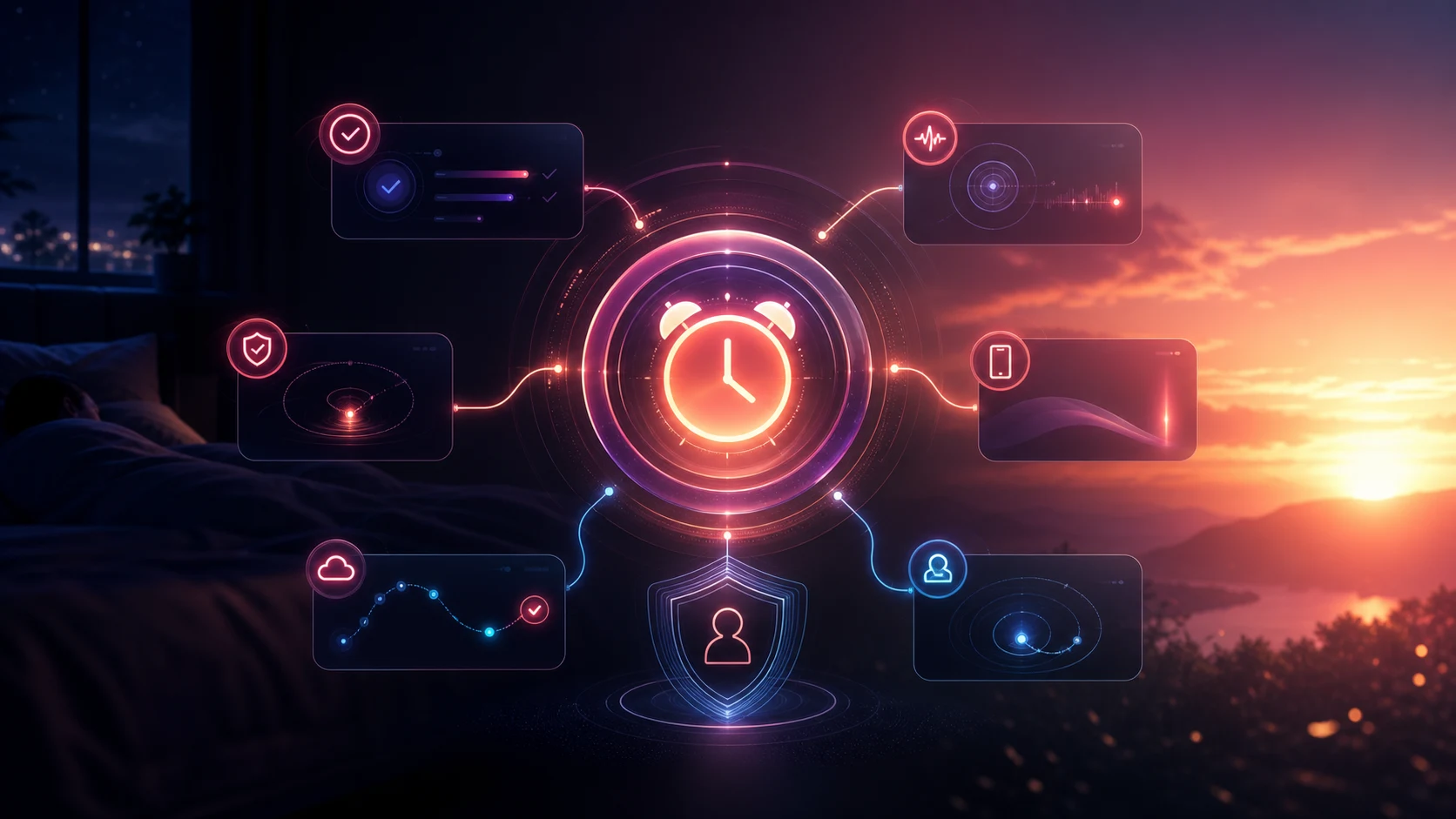
Use one primary mission alarm, one separate backup for important mornings, tested sound and charging, and a wake check if you don't reliably stay up.
Living alone removes the accidental backup
No one hears the shower not running. No one knocks when the second alarm has been playing too long. That can feel freeing at night and terrifying before an early obligation. Build the backup before you need it.
Test the primary alarm on an ordinary day. Make dismissal happen outside the bedroom, and add a wake check if you are known to crawl back into bed after standing up.
Add layers without building a panic machine
For normal days, one reliable mission may be enough. For a flight, exam, first shift, or last warning at work, add a separate backup device, smart light, or trusted person. Keep each layer clear: primary wakes you, backup catches failure, wake check keeps you up.
If repeated systems fail despite enough sleep, look for health clues such as snoring, gasping, headaches, dry mouth, or daytime sleepiness. Living alone makes self-observation harder, which is another reason to take patterns seriously.
Common questions
Should I ask a friend to call every morning?
For one important morning, sure. As a daily plan, it may be better to build a system you can own.
What backup device should I use?
Use something independent from the phone if the stakes are high: a separate alarm clock, smart light, vibrating device, or timed call.
Sources & further reading
We use primary public-health guidance and original research where the topic makes factual claims about sleep. Sources are reviewed for relevance, not used as decoration.
