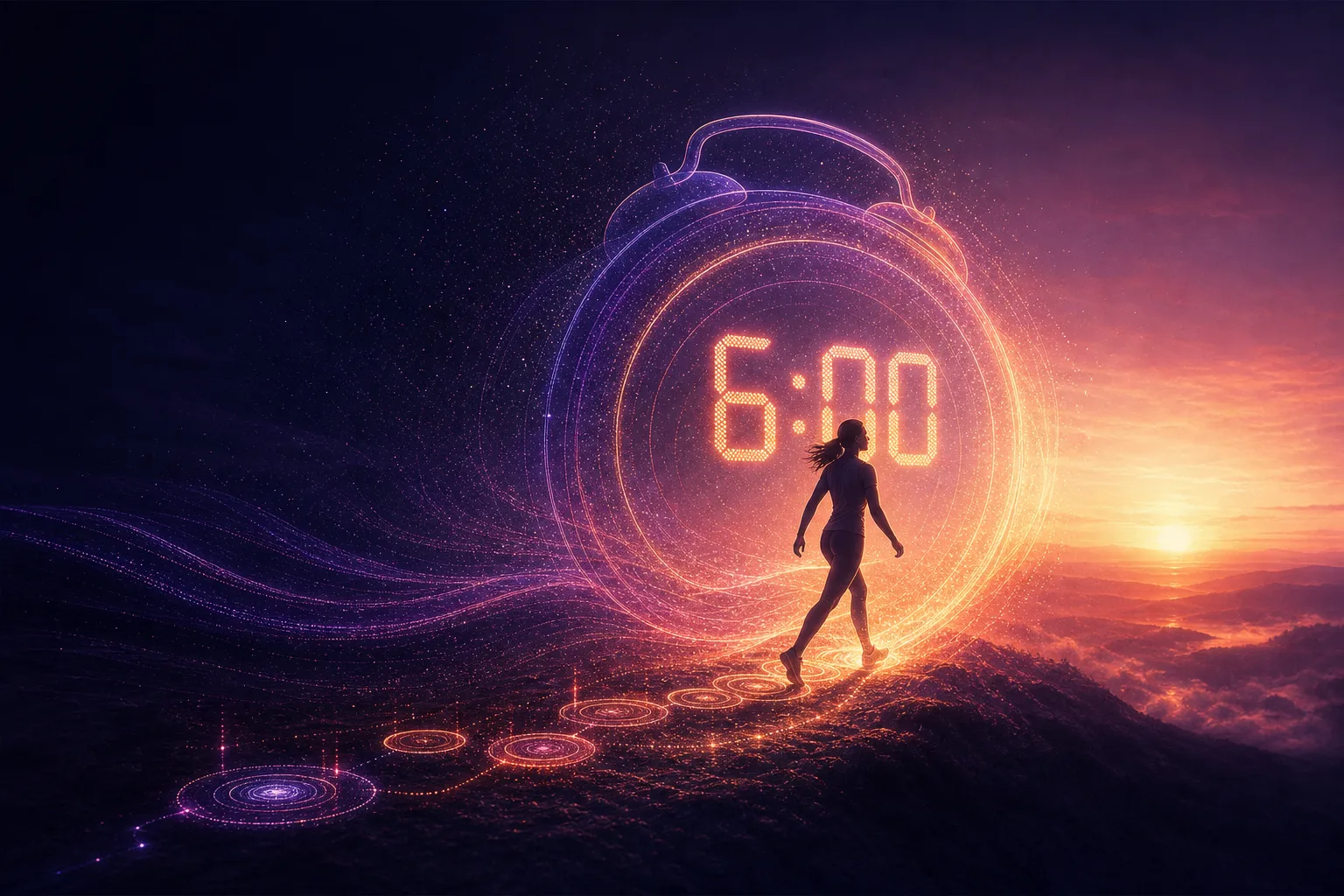
A dawn-simulation light may make a dark room easier to wake in. Set it to brighten before your alarm, test the placement, and keep sound or vibration as backup.
Light can begin the morning before the sound
A sunrise clock slowly brightens the room while you are still asleep. Some studies find benefits for alertness or waking experience, though results and devices vary. It isn't the same as receiving outdoor morning light after you rise.
Place it where light reaches your eyes indirectly and follow the device instructions. Test it on ordinary mornings before trusting it for a flight or shift.
Keep the gentle part backed up
Use a sound, vibration, or mission alarm at the target time until you know the light reliably helps. In winter, continue with real daylight when it becomes available.
Ask a clinician before strong light treatment if you have eye disease, bipolar disorder, or medication that affects light sensitivity. A bedside glow is a tool, not universal treatment.
Common questions
Will it wake a heavy sleeper?
It may help, but many heavy sleepers still need sound, vibration, or a task-based backup.
Is a sunrise clock the same as light therapy?
No. Brightness, timing, and intended use differ; treatment-level light should follow appropriate guidance.
Sources & further reading
We use primary public-health guidance and original research where the topic makes factual claims about sleep. Sources are reviewed for relevance, not used as decoration.
