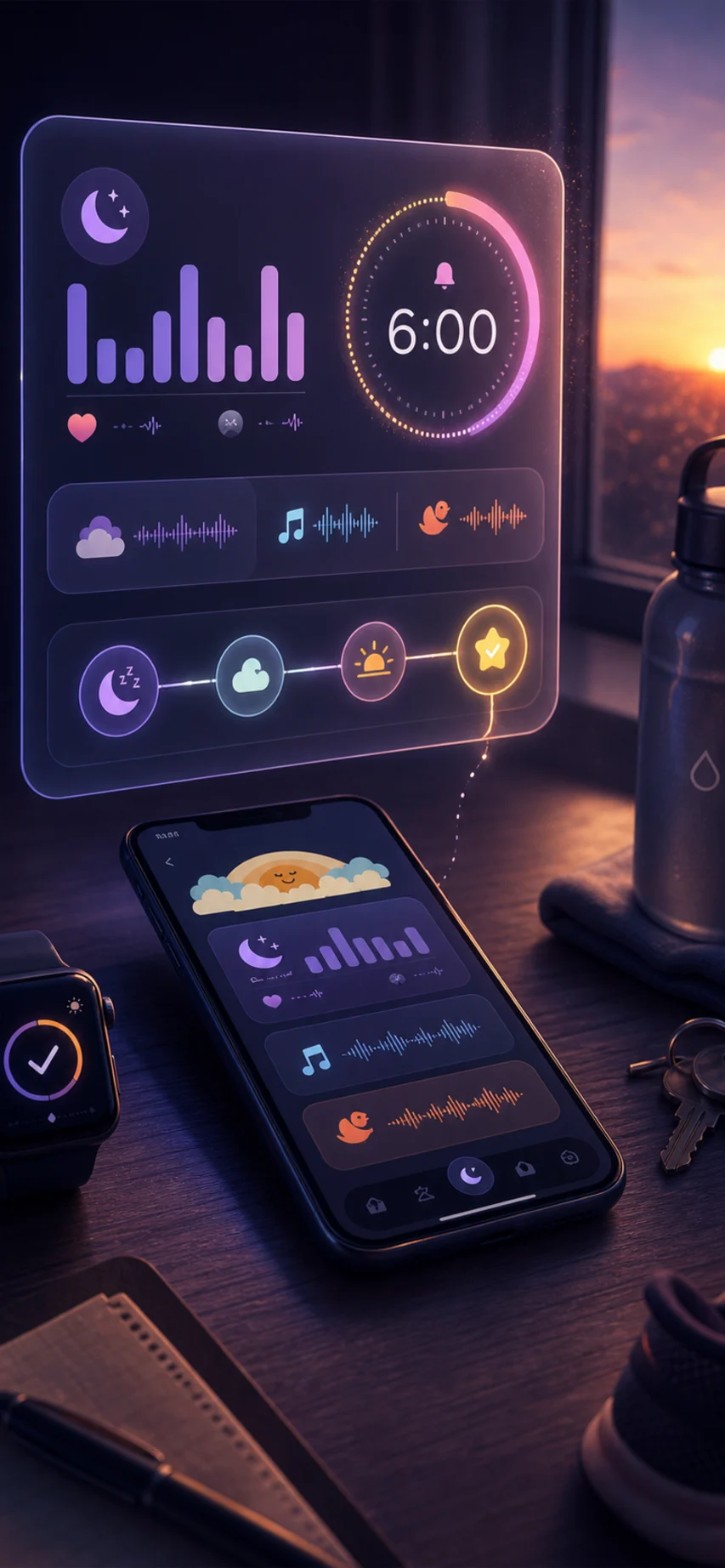
Your body clock runs on an approximately 24-hour rhythm. It doesn't instantly follow shifts, travel, or a late night just because the schedule needs it to.
The alarm is talking to more than habit
At some hours your body is helping you wake; at others it is still strongly promoting sleep. That is why a 6 AM alarm can feel completely different after travel, night shifts, or a weekend of sleeping until noon.
Light is one of the strongest cues. Meals, movement, and routines also carry timing information. The system changes gradually, not because a calendar invitation says tomorrow begins earlier.
Use timing as an explanation, not an excuse or identity
Get light after the wake time you want to strengthen and reduce very bright late-evening light when moving earlier. Make changes in steps. Don't use an early alarm alone and call the resulting sleep loss an adjustment.
Shift workers and people with circadian disorders may need different plans and clinical support. A body clock is real biology, not a moral ranking of early and late people.
Common questions
Is the body clock exactly 24 hours?
It is roughly 24 hours and is adjusted by daily cues, especially light.
Can I change mine?
Timing can shift, but genetics, age, schedule, and health affect how easily and how far.
Sources & further reading
We use primary public-health guidance and original research where the topic makes factual claims about sleep. Sources are reviewed for relevance, not used as decoration.
