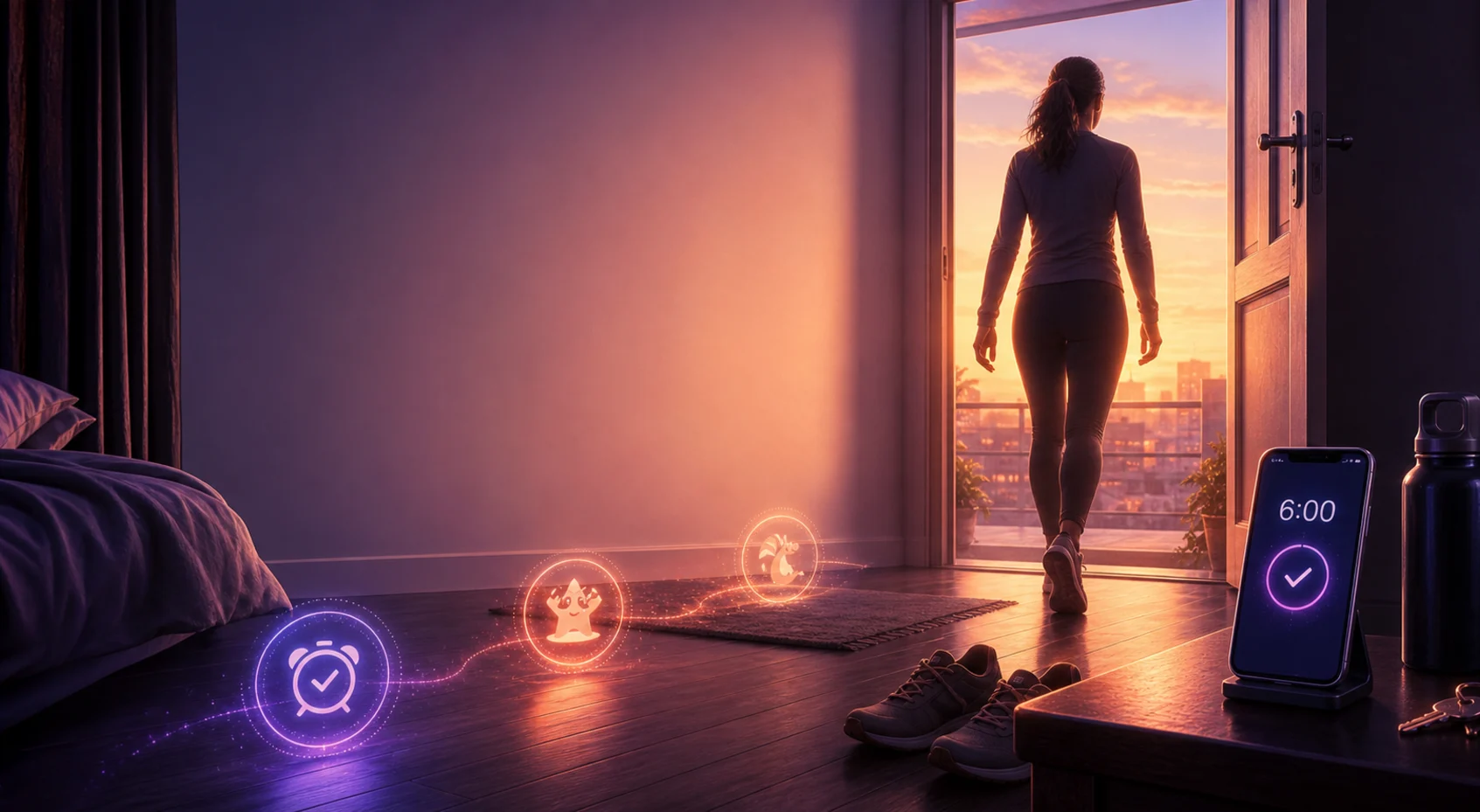
A longer sleep may improve how you feel and perform, yet different effects recover at different speeds. Weekend sleep helps; it doesn't make repeated weekday restriction free.
Feeling better is real, but it isn't the whole picture
You sleep ten hours and wake feeling almost human again. That improvement matters. Research also shows that sleepiness, reaction time, mood, and other measures don't always return together, especially after several restricted nights.
This is why the internet's two loud answers are both too neat. Catch-up sleep isn't useless, and one Sunday lie-in isn't a complete reset. The body recovers in more than one way and on more than one timetable.
Let recovery be a deliberate choice
After a truly short night, ask whether tomorrow's alarm can safely move. If it can, give yourself more time. If it can't, make the morning low risk and aim for earlier sleep over the next few nights rather than expecting one giant night to settle everything.
Riso should help you keep commitments that matter, not trap you inside yesterday's schedule. Changing an alarm because your body needs recovery can be responsible. The useful question is whether the later morning helps you return to a workable pattern.
Common questions
Can I catch up on weekends?
Extra sleep may help. Very large schedule changes can also make Monday harder, so prevent the weekday shortage where you can.
How many recovery nights do I need?
There is no universal number. It depends on how much sleep was lost and what part of recovery you are measuring.
Sources & further reading
We use primary public-health guidance and original research where the topic makes factual claims about sleep. Sources are reviewed for relevance, not used as decoration.
